NEWS

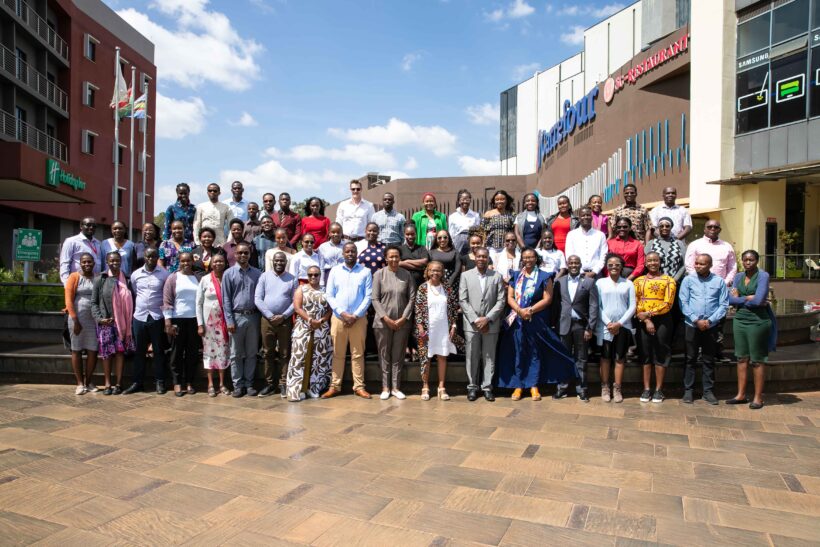
Africa’s agrifood systems are under increasing pressure to show results that are both inclusive and measurable. As a result, there is a growing need for professionals who can gather evidence, share findings clearly, and support decisions that promote fair and equitable development. Preparing the next generation of impact leaders is essential to ensuring solutions that are people-focused and can grow sustainably across the continent.
The launch of the Young Impact Associates (YIA) Fellowship, an IPO event led by 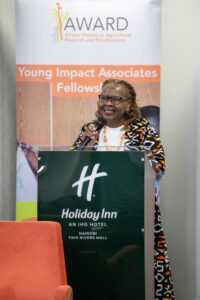 , marks a new phase in strengthening Africa’s Youth leadership and impact measurement capacity in agrifood systems involving 24 Associates from Kenya, Uganda, and Ghana, all under 32 years of age.
“You are the 24, selected out of nearly 5,000 applicants” emphasized Dr. Susan Kaaria, AWARD Director. “And that alone speaks about your potential.”
Speaking during the launch, she reminded the Associates the Fellowship is a huge investment on them, and that they have a responsibility to show why it is a worthy investment. In a context where evidence often fails to translate into decisions that serve people, she positioned the Fellowship as part of the effort to close that gap.
The Fellowship will equip the emerging African leaders in agrifood impact measurement with the knowledge, tools, skills, and networks to assess socially inclusive interventions and turn complex data into clear, actionable recommendations. This directly aligns with AWARD’s commitment to data-driven leadership and gender-responsive agrifood systems across Africa.
Spotlight on the Young Impact Associates
The Young Impact Associates were selected based on their experience, interest and aspirations in driving transformational change through data-driven decisions in African agrifood systems. The launch provided a platform to spotlight some Associates and how they hope to leverage the Fellowship to advance their work.
Suzanne Osei from Ghana questioned whether traditional monitoring captures true transformation for rural women. “We report outputs,” she said, “but are we measuring what change really means to women on the ground?” Her selection affirms her potential and responsibility to highlight real impact measurement.
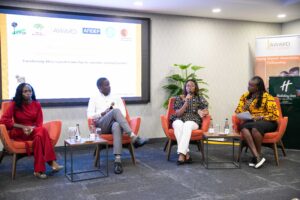
Millicent Achieng, a budding Kenyan agricultural researcher currently on internship at Kenya Agricultural and Livestock Research Organization (KALRO) under a research project focusing on wheat rust research shared how she aims to bridge the gap between science and farmers. She collects data daily but asks, “How does this translate into reduced losses and better livelihoods?” She seeks to enhance her communication skills to convert research into tangible food security gains.
Jonathan Otim from Uganda sees leadership as rooted in empathy. “Every decision we make affects real people,” he said. Through the Fellowship, he aims to lead inclusively, ensuring systems serve women, youth, and marginalized groups.
Dominic Amanya, a Kenyan with South Sudanese roots who grew up in the Kakuma Refugee camp, shared how he experienced food insecurity firsthand. “It’s not theory, it’s lived reality, and its more than what we see on the televisions and newspapers” he said. He sees agriculture as a path to dignity and resilience, and the Fellowship will allow him to build on his work around improving systems for vulnerable communities.
Hudson Wabuya from Uganda defines success as “deep, measurable, people-centered transformation.” He stressed that Africa’s challenge lies not in a lack of interventions but in the absence of inclusive systems and poor data use. “Africa does not suffer from a lack of interventions but because these interventions are not inclusive,” he said. “Data is a language of transformation,” he added, noting that without it, planning and service delivery suffer.
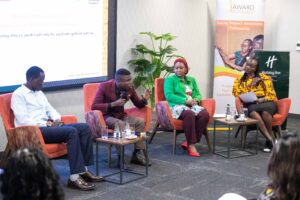
Suhuyini Karmil from Ghana sent a clear message to decision-makers, “Investing in young professionals is not a gamble, it is a strategic choice.” She argued that entrusting youth with meaningful responsibility is vital for building inclusive, sustainable systems.
Following the launch, the Associates began an intensive six-day Leadership and Career Development Course, marking the start of the Fellowship activities and laying the foundation for the year ahead.
From Knowledge to Action
The launch also featured reflections from leaders working closely with youth development programs, reinforcing the importance of translating knowledge into practical impact.
Tess Gitau, who works with youth across Africa through the Catholic Youth Network for Environmental Sustainability in Africa, emphasized the need for institutions to create space for young professionals to innovate. She noted that while youth often bring bold ideas, institutions must remain flexible enough to allow those ideas to grow and evolve. “Be open minded and expect the unexpected when we give the room and the opportunity to the youth,” she said.
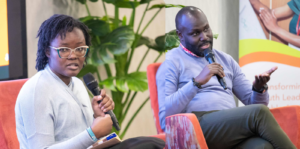
Deogracius Bagero, Regional Youth Engagement Advisor at AMREF Health Africa, underscored the importance of recognizing young professionals as partners in development rather than just beneficiaries. “Listen more and engage more and appreciate and recognize them as valued partners,” he said. He noted that meaningful impact begins with investing in individuals, equipping them with the knowledge, skills, and opportunities needed to create change in their communities and ultimately influence broader systems transformation.
The week concluded with gratitude and resolve as Associates reflected on the transformative six-day experience and reaffirmed their commitment to use the investment in them to influence policies, impact communities, and lead with evidence and empathy in shaping Africa’s future. Emphasizing one of the key outcomes of the training, Dr. Susan Kaaria noted that the Purpose Roadmaps developed by the Associates would serve as guiding tools for their leadership journeys.
See photos from the launch and the training
About the Young Impact Associates (YIA) Fellowship
The Young Impact Associates (YIA) – Agriculture Impact Fellowship is a year-long blended program designed to prepare emerging African leaders in impact measurement within agrifood systems.
Supported by the Mastercard Foundation and implemented through a consortium of Impact Partner Organizations (IPOs), comprising of CIFOR-ICRAF, African Women in Agricultural Research and Development (AWARD), African Institute for Development Policy (AFIDEP), and Akademiya2063, the Fellowship seeks to strengthen data-driven leadership and amplify the role of young African professionals in evidence-based decision-making across agrifood systems.