NEWS

Featuring expert voices driving equitable policy reforms across Kenya
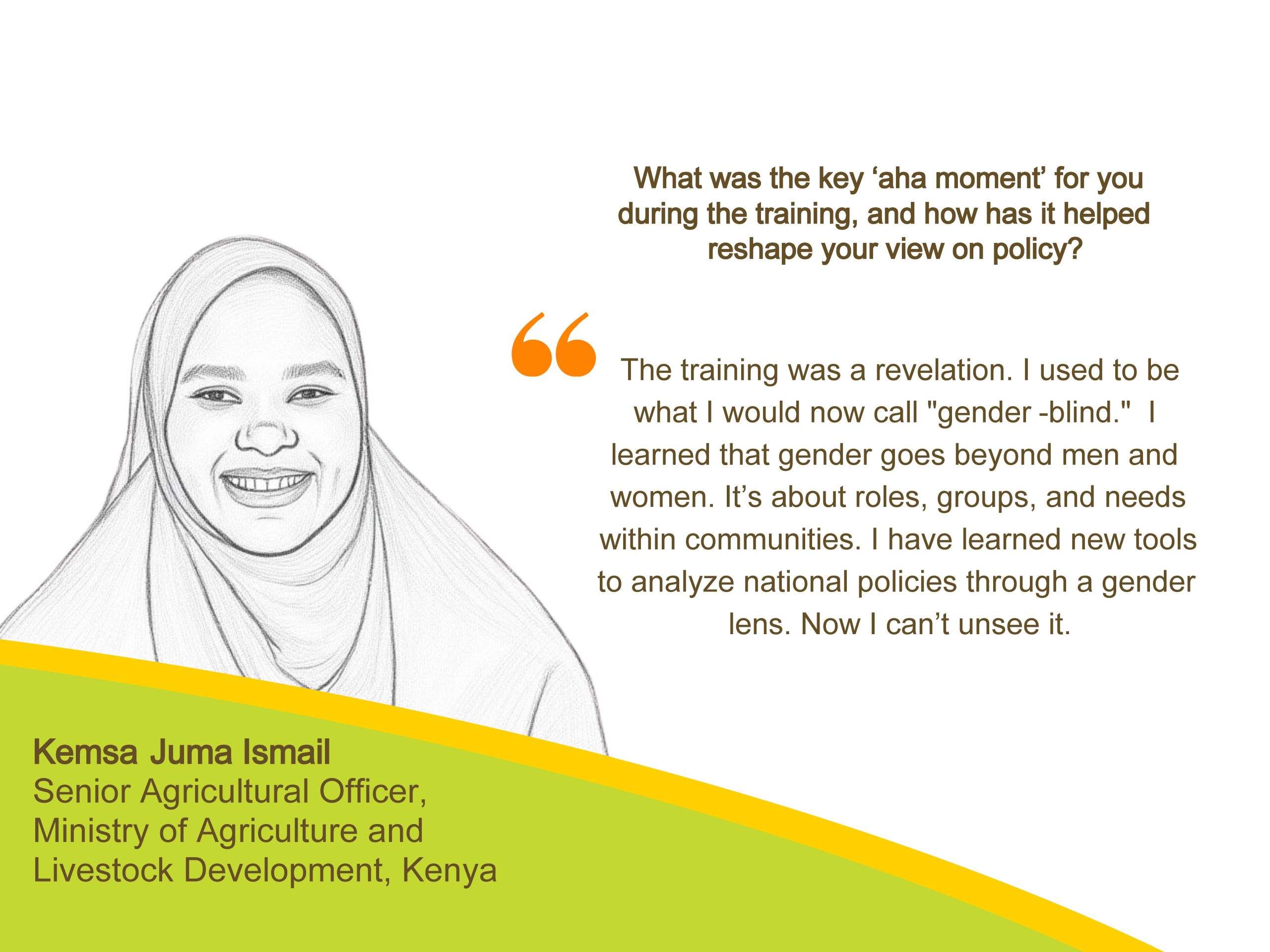
In this second feature, we talk to Ms. Kemsa Juma Ismail, Senior Agricultural Officer, Ministry of Agriculture and Livestock Development, Kenya who shares her insights on why gender reforms need champions within institutions to translate policies to practice.
Name: Kemsa Juma Ismail
Title: Senior Agricultural Officer
Institution: Ministry of Agriculture and Livestock Development, Kenya
Q: What was the key ‘aha moment’ for you during the training, and how has it helped reshape your view on policy?
Kemsa: Frankly, it’s been a revelation. I used to be what I would now call “gender-blind.” The training taught me that gender isn’t just about men and women, but about the different roles, groups, and needs within a community. I’ve learned to use new tools to view our national policies through a different lens, ensuring they are inclusive and effective for everyone. Now, I can’t unsee it. I must analyze policies with a critical eye towards gender, which is crucial for creating real, equitable change.
Q: What challenges do you find impact gender integration in agrifood policies the most?
Kemsa: Budgetary constraints are the biggest hurdle. Many ministries, including our State Department for Livestock, lack dedicated gender units or budget allocations for gender activities. Without funding, you can’t strengthen these units or properly sensitize staff. Also, there’s limited sensitization of gender agents in ministries, and that, too, ties back to funding. These factors create a cycle that makes it very difficult to design and implement the transformative policies we need.
Q: What opportunities does the GASP program create to tackle them?
Kemsa: The way I see it, Sensitization is the first step, which is precisely where we are now through this program. This training is the essential first step. By opening the eyes of officers like me, we create a core group of advocates within the system. When enough of us are sensitized, we can champion the cause from within, pushing for those crucial budget allocations and driving the uptake of better policy designs. Once leadership understands the importance, change follows.
Q: Tell us one fun fact about your job.
Kemsa: I work in the agriculture statistics department, and I love the “magic” of data! We collect raw data from the field and transform it into a meaningful story that supports national decision-making. It’s fulfilling to know that, even though I’m behind the scenes, my work contributes to shaping key agricultural decisions.