NEWS

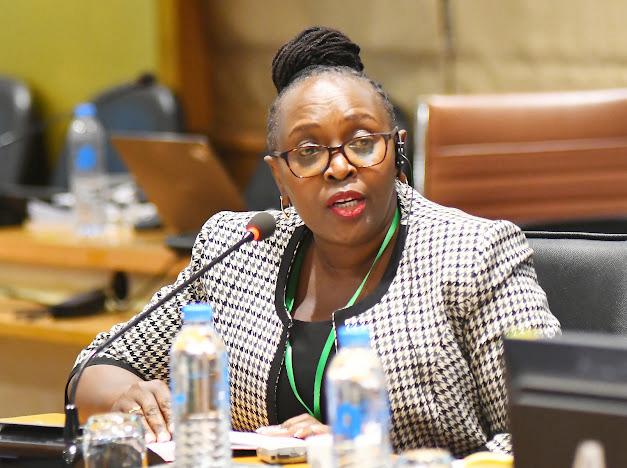
Dr. Alice, Murage, an AWARD Mentor, was recently appointed as the new Deputy Director for Crops for the Kenya Agricultural and Livestock Research Organization (KALRO). She describes the appointment as a pivotal moment both personally and professionally.
In this conversation, Dr. Murage reflects on her professional journey, her roadmap for Kenya’s crop research landscape, and how she views the roles of mentorship, partnership, and innovation in delivering meaningful research.
Q: Congratulations on your appointment as the Deputy Director General, Crops at KALRO. What does this new role mean to you, and what priorities will you be focusing on as you take up the position?
Thank you very much. This appointment is both a great honor and a great responsibility. Personally, it represents a culmination of many years of dedication to agricultural research and a reaffirmation of my belief that science must serve people. Professionally, it marks a new chapter where I have the opportunity to contribute at a strategic level to transforming Kenya’s crop research landscape.
As Deputy Director General, Crops, my overarching goal is to ensure that research has a measurable impact. I am very passionate about conducting research that brings about change at the farmer’s level. Generating knowledge through research is beneficial, but I would be even happier when this knowledge transforms lives. My priorities are threefold:
- First, to enhance performance and accountability across crop research programs by fostering a results-driven culture and aligning research outputs with national priorities. I want to foster a culture where all scientists and technical staff are accountable for their use of resources (time and money), ensuring that we achieve tangible impact and positive returns on investment in research.
- Second, to intensify collaboration and partnerships, especially with county governments, private sector actors, and development partners, so that farmers can access innovations in a timely and easier manner. I want to spearhead effective collaborations as critical levers of accelerating action towards food security.
- Third, to champion mentorship and talent development, nurturing a new generation of researchers who are innovative, entrepreneurial, and responsive to farmers’ needs. Through mentorship, I hope to establish a system and a long-term commitment that will grow the capabilities and networks of young scientists and equip them to view challenges as opportunities for growth.
Ultimately, my goal is to make KALRO’s impact visible, and through these three broad priorities, I want to position KALRO’s work to translate into increased income and better livelihoods for Kenyan farmers.
Q: What were some of the defining moments during your tenure at KALRO up to this momentous milestone?
My journey at KALRO has been marked by several defining moments that have shaped my leadership philosophy and professional growth.
One pivotal experience was when I assumed leadership of KALRO’s Socio-Economics and Policy Department. At the time, the department was tasked with delivering a major conference within six months. It was an ambitious goal that demanded clarity of vision, teamwork, and focus. I rallied the staff around a shared vision, and together we delivered a highly successful international conference. That experience taught me that leadership is not about authority, but about inspiring others to own the vision and collectively deliver it.
Another defining moment came in 2023, when I was appointed the National Coordinator of the Korea-Africa Food and Agriculture Cooperation Initiative (KAFACI) project. I was tasked with organizing the 6th KAFACI General Assembly, a strategic stakeholder meeting that brought together ministers and delegates from over 20 countries. Through collaboration and coordination, we delivered an incredible event that earned KALRO an award for excellence from the government of South Korea. It was a proud moment for both the institution and me.
Another milestone was early in my career, upon completing my postdoctoral fellowship with the International Centre of Insect Physiology and Ecology (icipe) in Uganda. My mandate was to establish an operational research office from the ground up. Arriving with only a vehicle and a mission, I secured office space, recruited staff, and established partnerships. Within two years, we had established a fully functional office, and hundreds of farmers had adopted the Push–Pull Technology to improve their yields and resilience. That experience deepened my appreciation for adaptability, innovation, and the ability to lead even in unfamiliar environments.
Each of these milestones has prepared me for my new role, reinforcing my conviction that leadership in research is not about hierarchy, but creating environments where ideas thrive, people grow, and partnerships deliver lasting impact.
Q: Mentoring and nurturing the next generation of researchers is something you’ve been associated with through AWARD. How important do you think mentorship is in sustaining agricultural research leadership?
Mentorship is central to sustaining research leadership. Science research thrives on continuity, and mentorship ensures that institutional memory, professional ethics, and technical excellence are passed on to the next generation.
Through AWARD, I learned that effective mentorship goes far beyond supervision to empowerment, confidence building, and value transfer. I will never forget my mentee, Dr. Jamila from Nigeria, in the AWARD-ICWAE Mentoring Program. When we first met, she was shy and uncertain of her potential. After sharing my own journey and helping her recognize her strengths, I watched her grow into a confident, resilient, and visionary young scientist. Through her, I witnessed firsthand how mentorship can transform potential into performance. When young researchers feel supported, they are more likely to innovate, publish, and lead. Mentorship truly helps young scientists, especially women, navigate challenges, articulate their vision, and find their voice in spaces where they might otherwise feel invisible.
Q: Are you currently mentoring other young women in agriculture?
Yes, I am deeply committed to mentoring young women in agricultural research and leadership. I mentor several early-career women scientists within KALRO, as well as Master’s and PhD students. I also take every opportunity to engage with young graduates during their graduation ceremonies and outreach events, sharing lessons from my own journey and encouraging them to see science as both a calling and a catalyst for transformation.
My mentorship approach goes beyond technical or academic supervision to include personal and professional growth. I emphasize not only research excellence but also leadership, communication, integrity, and work-life balance. I encourage my mentees to find their voice, own their space, and lead with confidence and empathy.
I am also working to establish a structured mentorship program within KALRO, where senior scientists intentionally nurture early-career researchers, particularly women and young researchers. For me, watching mentees grow to become mentors is not just rewarding, but it also creates a multiplier effect that is the true test of sustainability in agricultural research.
Q: What would you like to see more of in a bid to have more women take up leadership positions in agricultural research?
We need deliberate and systemic action to unlock the full leadership potential of women in agricultural research. This begins with creating enabling institutional policies that promote flexible work environments and gender-sensitive recruitment. Such policies are essential to ensure that women can thrive without sacrificing personal responsibility.
Equally important are structured mentorship and sponsorship programs that intentionally prepare women not only for technical excellence but also for strategic leadership. Representation matters. When women see others like them in decision-making spaces, it reinforces that leadership is attainable.
We also need targeted leadership capacity-building interventions that build confidence, negotiation, and decision-making skills. Often, women already possess the competence and expertise, but lack visibility, networks, or the platforms to showcase their capabilities. Empowering them with the right skills and opportunities can make a transformative difference.
Q: Looking ahead, what is your vision for the future of Kenya’s agricultural research?
I want to see research leading to better families, better livelihoods, better education, and resilience. I envision a research landscape grounded in modern and efficient technologies that can anticipate and address emerging challenges, including climate change, food safety, and sustainable resource management.
For scientists, the future requires investments in capacity building, digital skills, and international collaboration. For farmers, research outcomes must be accessible, affordable, and adaptable.
In essence, I envision a future where research moves from publications to practice, from projects to partnerships, and from innovation to impact, ensuring that agriculture remains the backbone of Kenya’s prosperity.